


MemantoClaw
MemantoClaw is an open-source reference stack that simplifies running OpenClaw always-on assistants safely with built-in long-term memory. It combines three core technologies:- Autonomy (OpenClaw): A powerful open-source agent framework.
- Security (NVIDIA OpenShell): A hardened sandbox that restricts network egress and file access.
- Memory (Memanto): A long-term memory architecture powered by Moorcheh that carries context across sessions.
🏗️ Architecture
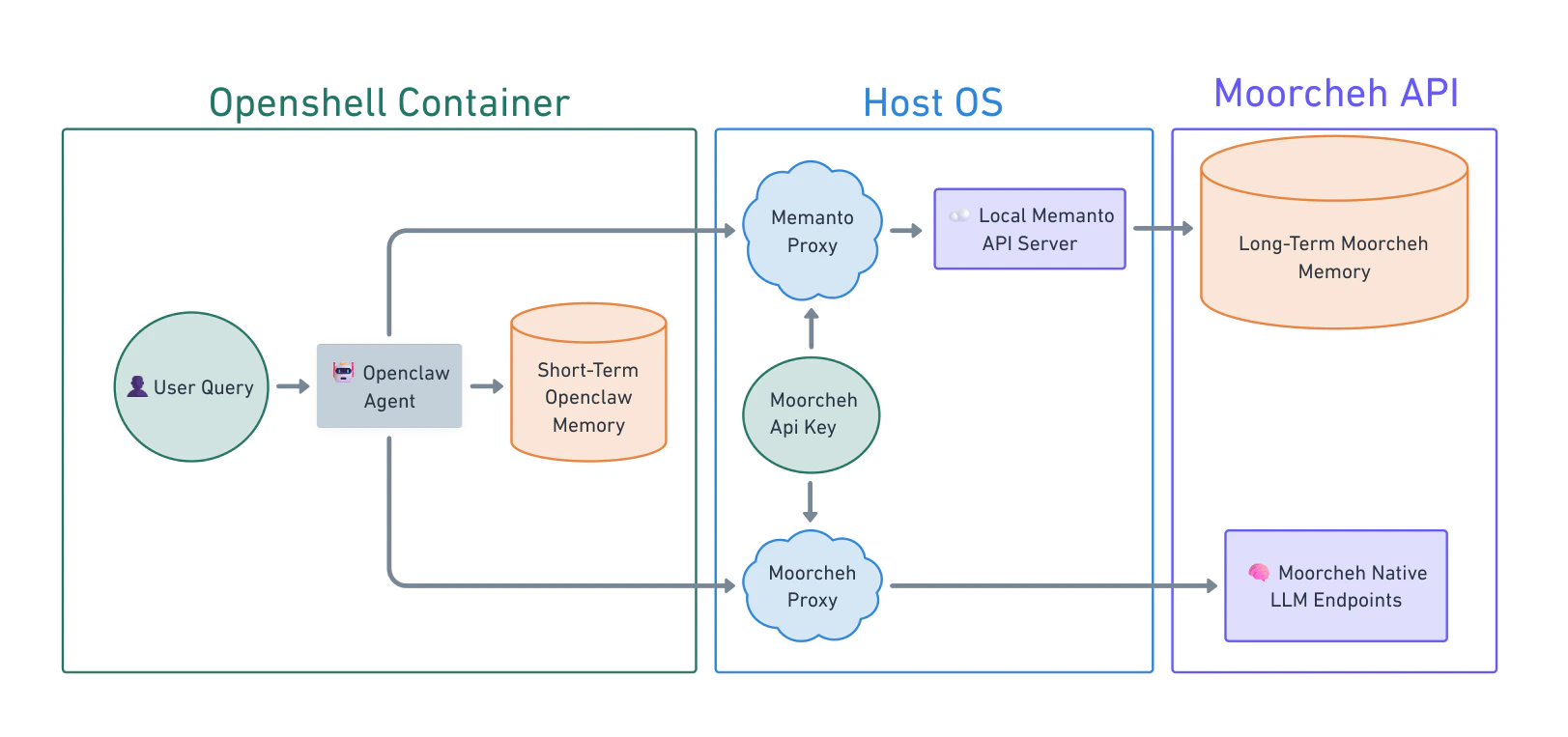
- The host manages credentials and provider routing to long-term memory services.
- The sandbox runs OpenClaw under OpenShell policy enforcement.
- The agent receives only the context it needs for each task, not raw host credentials or memory databases.
The Ecosystem and How the Stack Fits Together
Three pieces usually appear together in a MemantoClaw deployment, each with a distinct scope:
MemantoClaw sits above OpenShell in the operator workflow. It drives OpenShell APIs and CLI to create and configure the sandbox that runs OpenClaw. Models and endpoints sit behind OpenShell’s inference routing. MemantoClaw onboarding wires provider choice into that routing, and inherently injects the Memanto memory bridge.
MemantoClaw Path versus OpenShell Path
Both paths assume OpenShell can sandbox a workload. The difference is who owns the integration work.- MemantoClaw path: You adopt the reference stack. MemantoClaw’s blueprint encodes a hardened image, default policies, Moorcheh integration, and orchestration so
memantoclaw onboardcan provision a validated environment with minimal manual configuration. - OpenShell path: You use OpenShell as the platform and supply your own container, install steps, policy YAML, provider setup, and any host bridges.
What MemantoClaw Adds Beyond the OpenShell Community Sandbox
The Memanto Advantage
Unified API Key for Memory and Inference
MemantoClaw simplifies credential management by bundling both long-term memory access and native LLM inference into a single API key. Instead of juggling separate keys for your vector database (or Moorcheh memory service) and your LLM inference provider, your Moorcheh API key authenticates both. When you runmemantoclaw onboard, you provide this one key, and MemantoClaw automatically configures the OpenShell inference gateway to proxy your LLM requests while simultaneously enabling the zero-config memory bridge.
Secure and Real-time Memory
By leveraging Moorcheh’s infrastructure, the Memanto memory layer offers zero-wait ingestion (no indexing delays) and a secure host-bridge architecture where memory stays safely on Moorcheh, and the sandbox only receives specific retrieved context.Deep Dive: How It Works
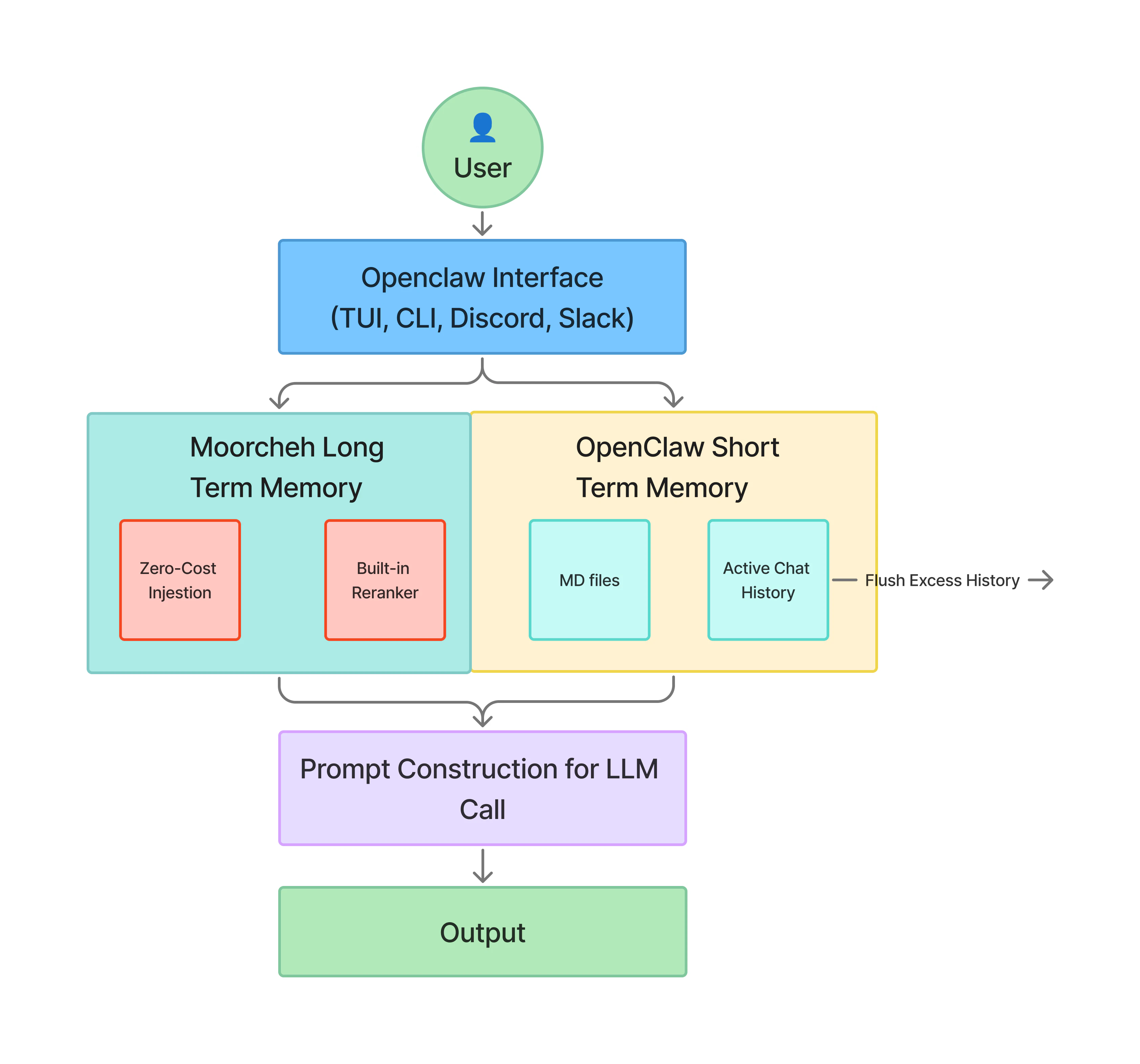
For complete, unabridged technical details on this topic, refer to the official NVIDIA NemoClaw Documentation. Portions of this guide are summarized and adapted from NVIDIA Corporation (Copyright © 2026), licensed under the Apache License, Version 2.0.